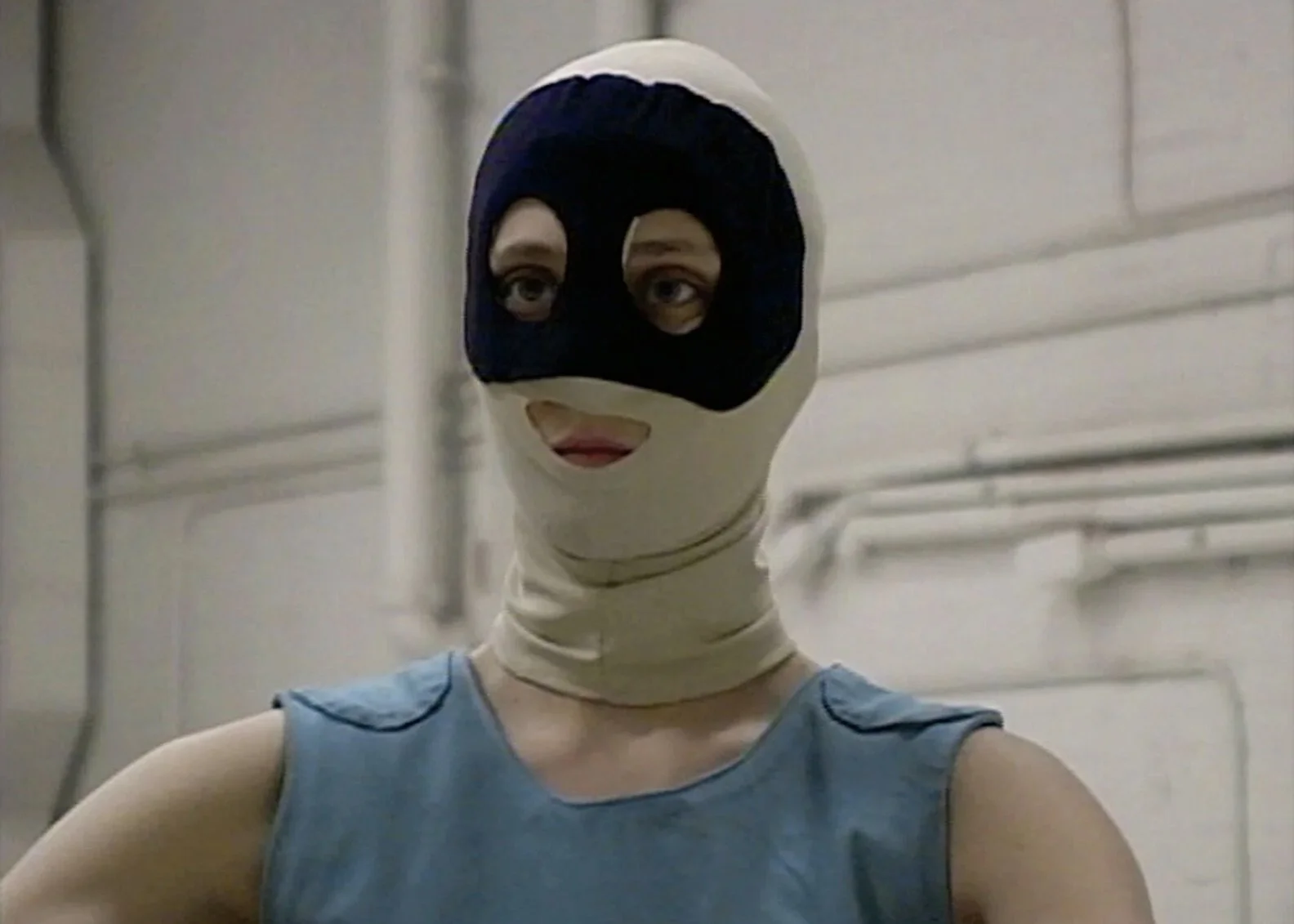
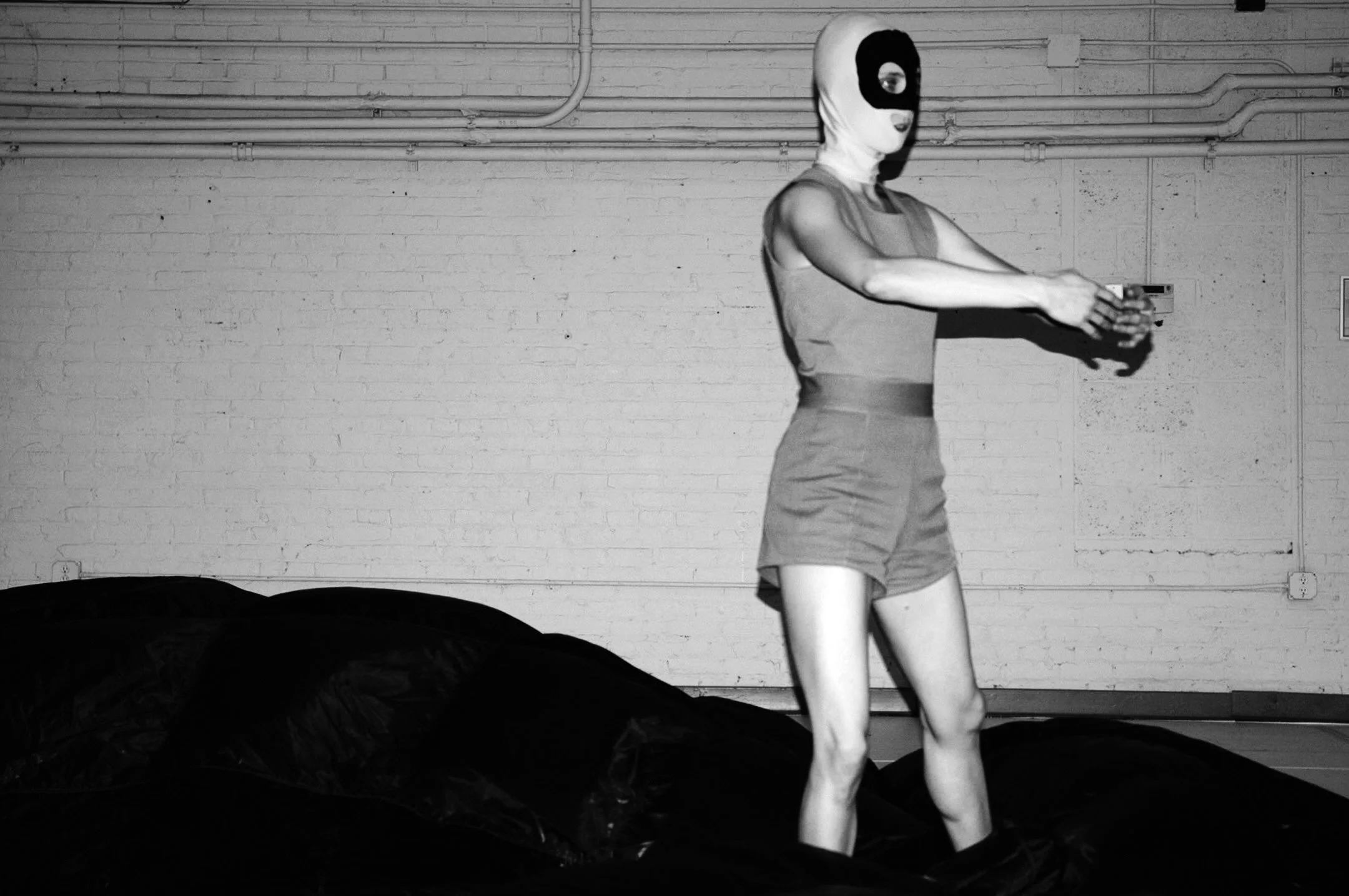
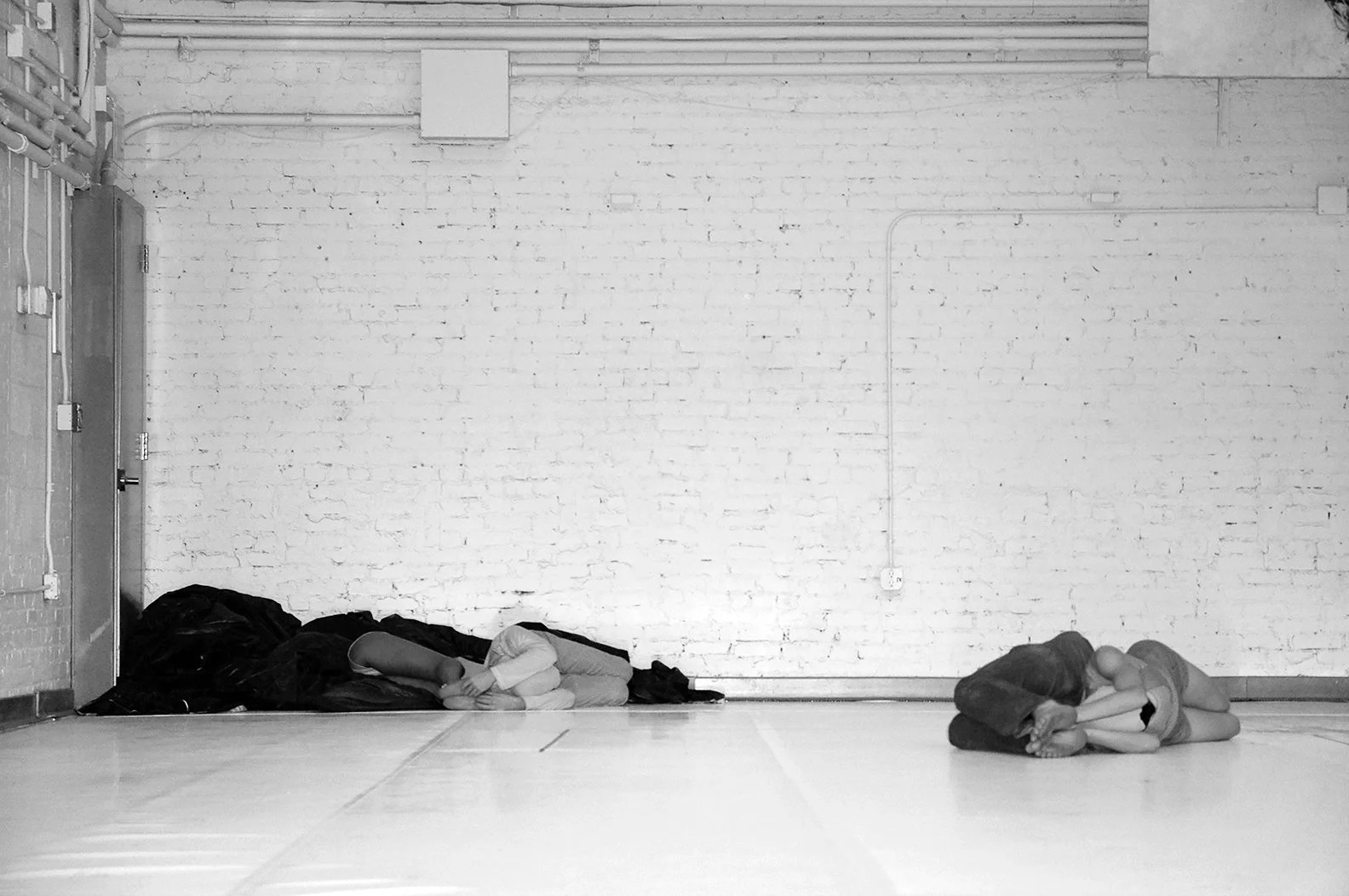
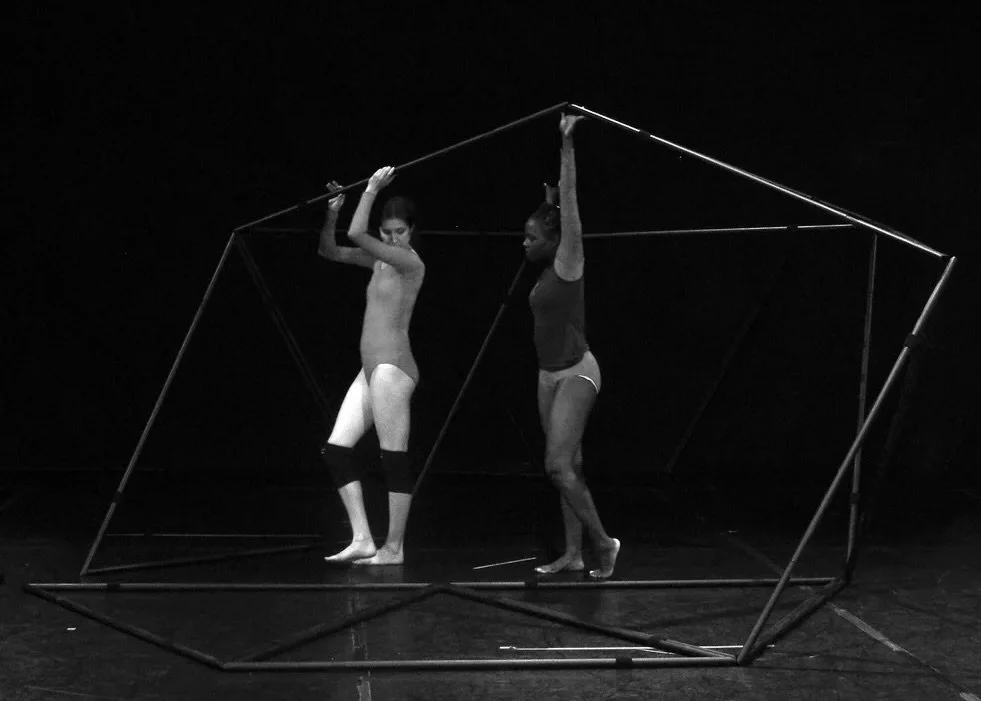
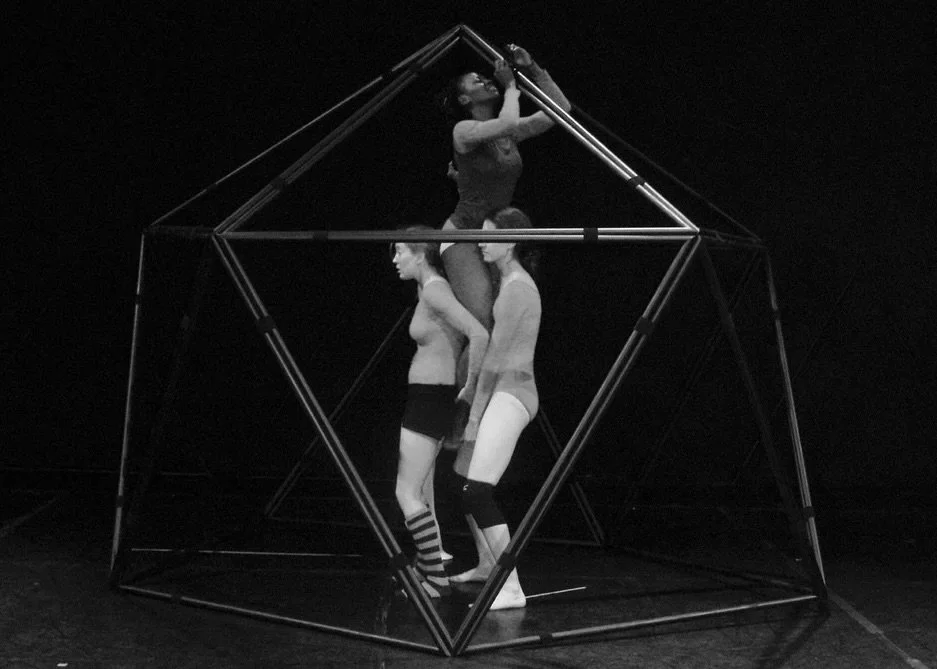
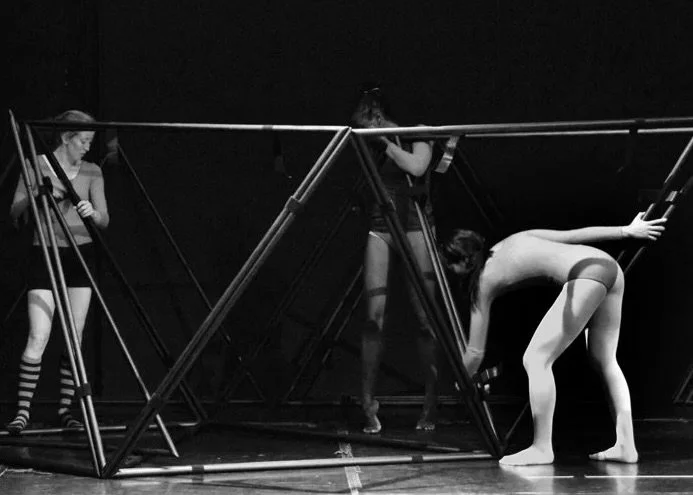
Floyd transformed the research materials of Nipper’s practice into an open system of performance studies.
Collages, diagrams, audition tapes, material tests,
and models entered the work as active components rather than supporting material.
Developed from Hurricane Floyd,
the 1999 storm that moved through the southeastern United States,
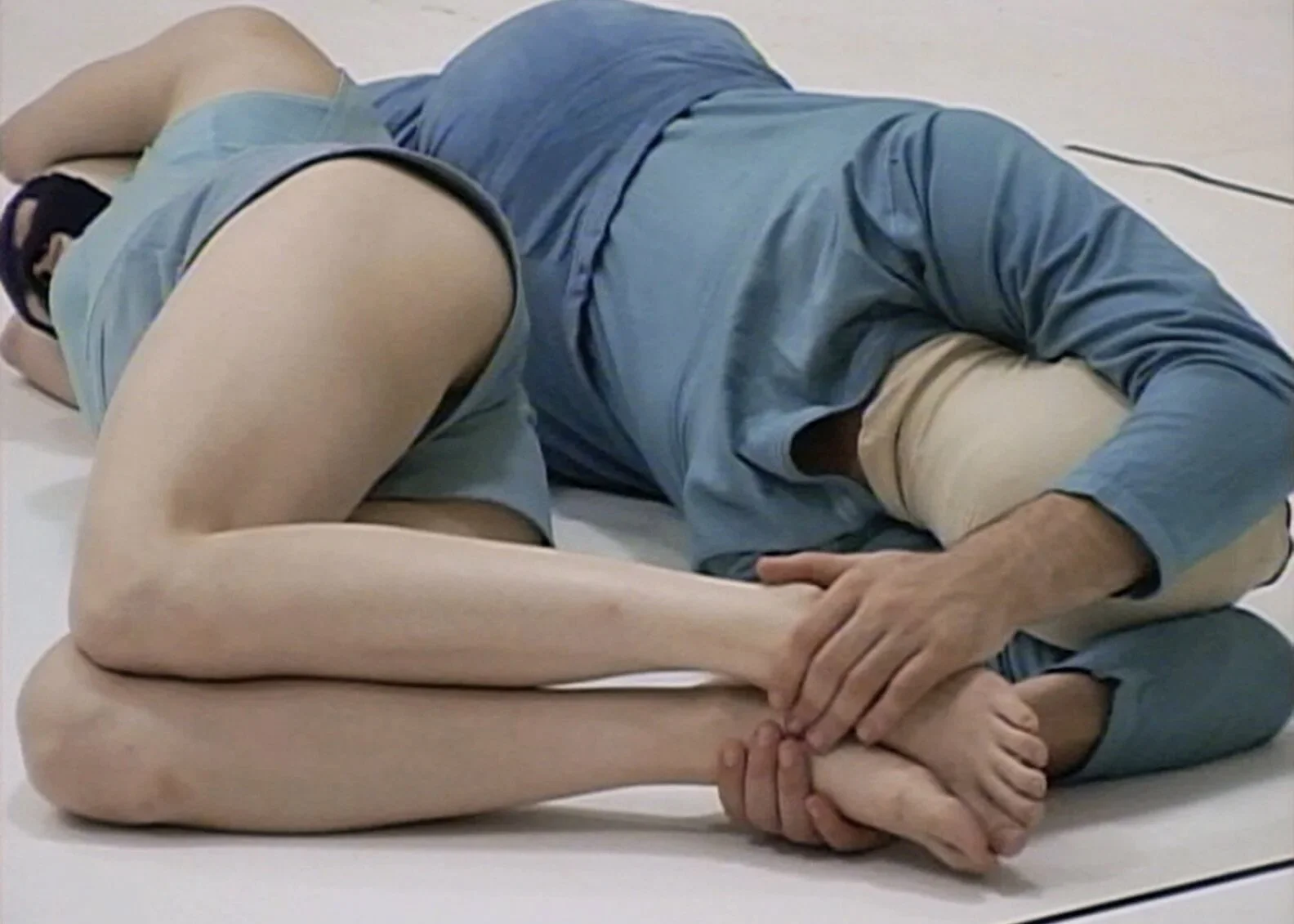
the project also imagined Floyd as a figure lying face down on the ground.
In the work, sky falls to floor,
the storm becomes a single plane,
and that plane begins to circle.
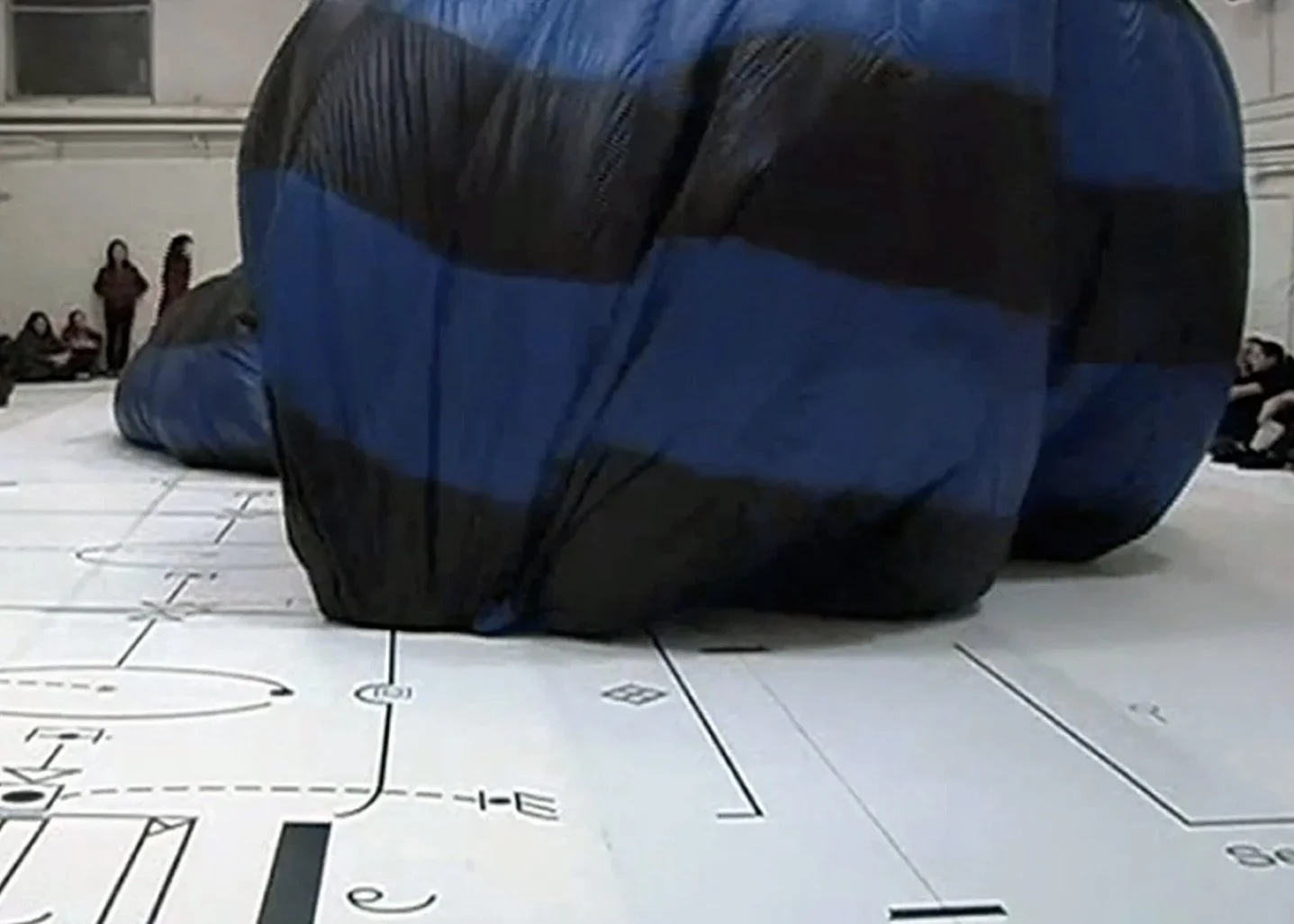
Black vinyl symbols and text installed across a white Marley floor were
drawn from the score for the performance study Circle Circle.
As part of Floyd,
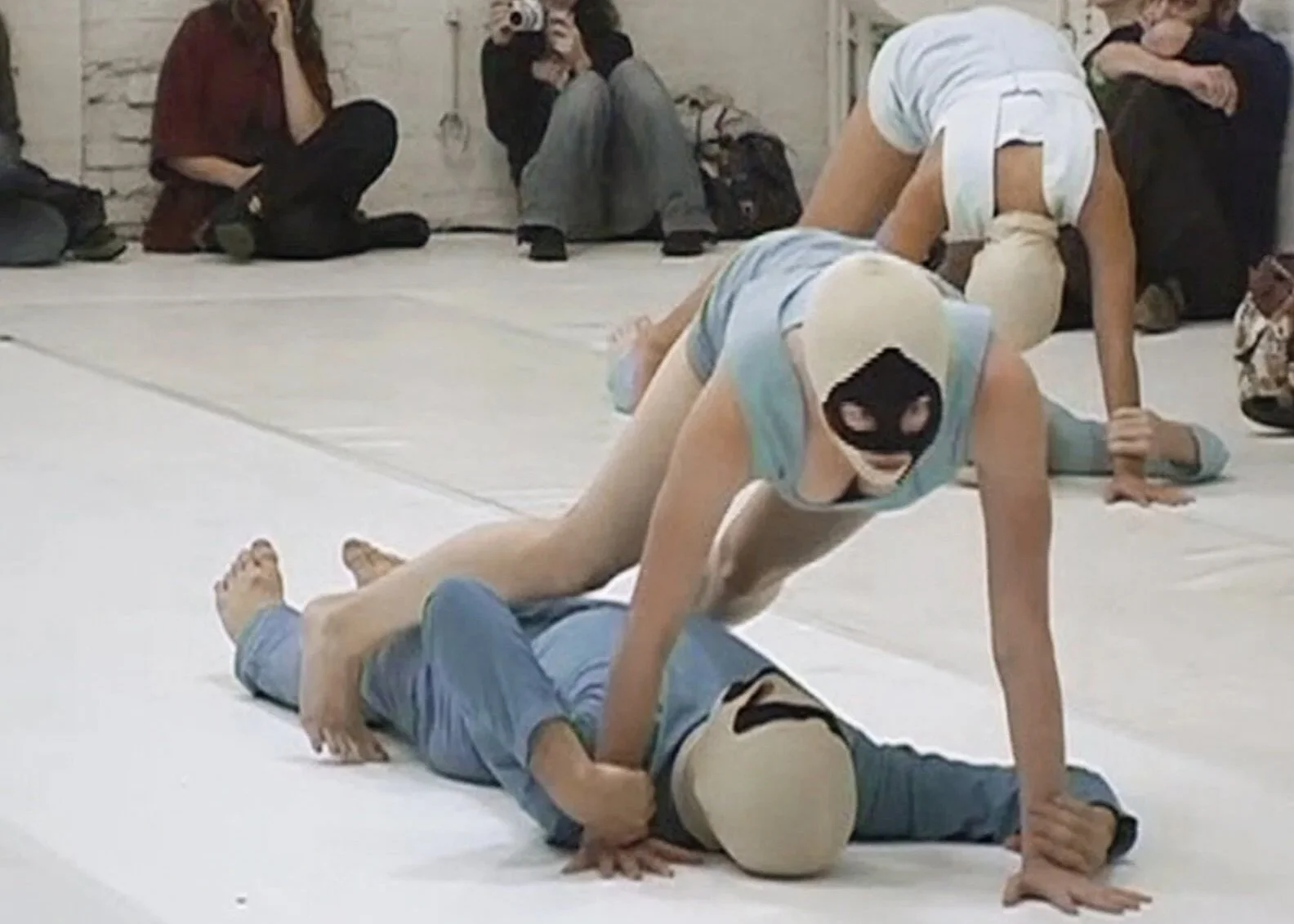
the project included three research-based performance studies:
Sapphire,
Circle Circle,
and Weather Center.
Commissioned by Performa 07 and presented at Judson Memorial Church,
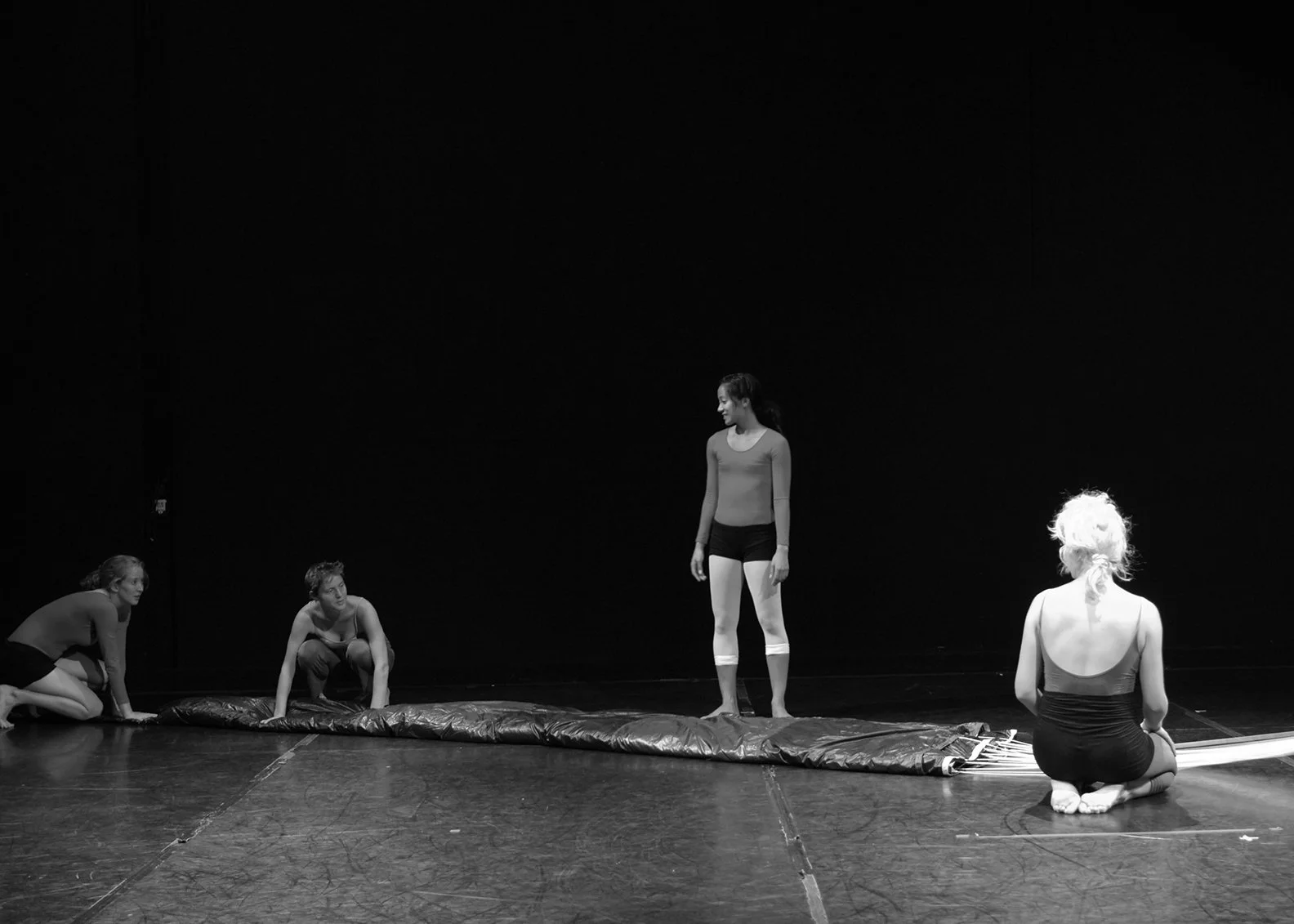
the live work placed audiences in direct proximity to dancers,
floor diagrams,
movement scores,
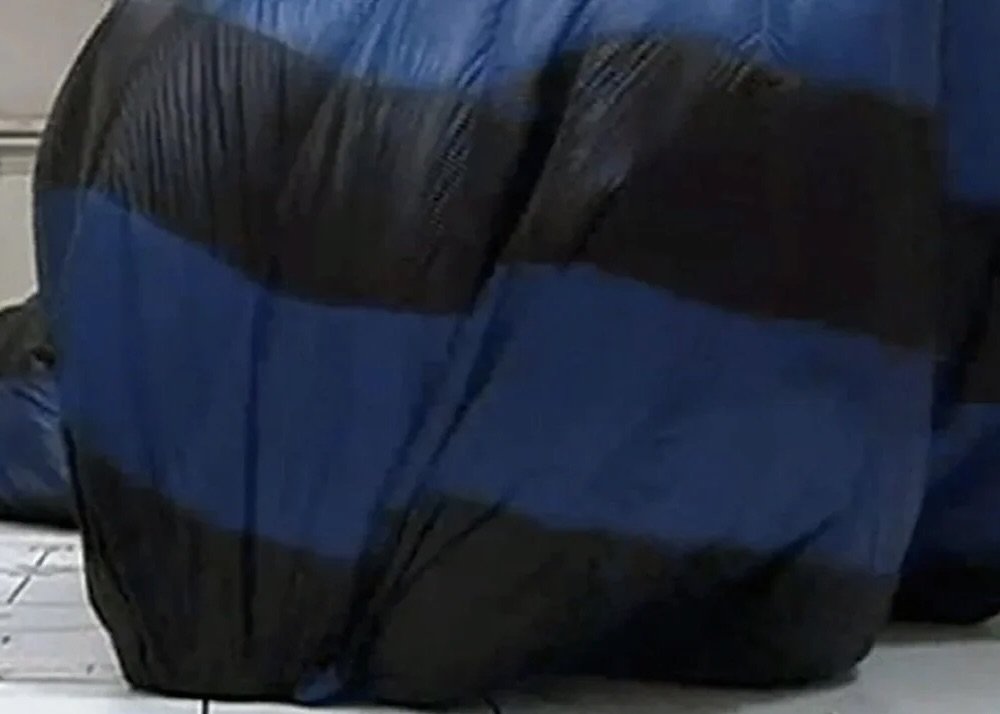
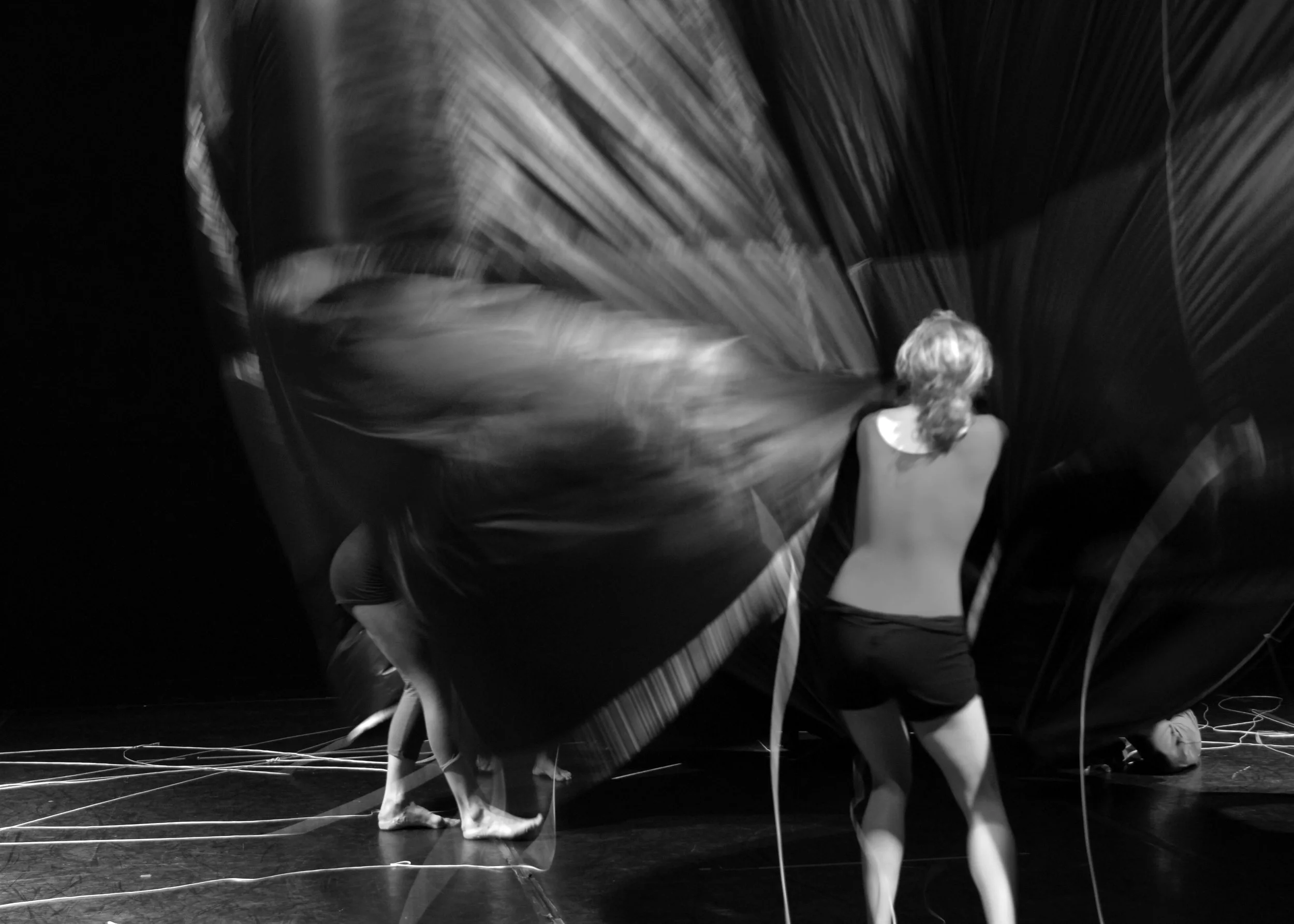
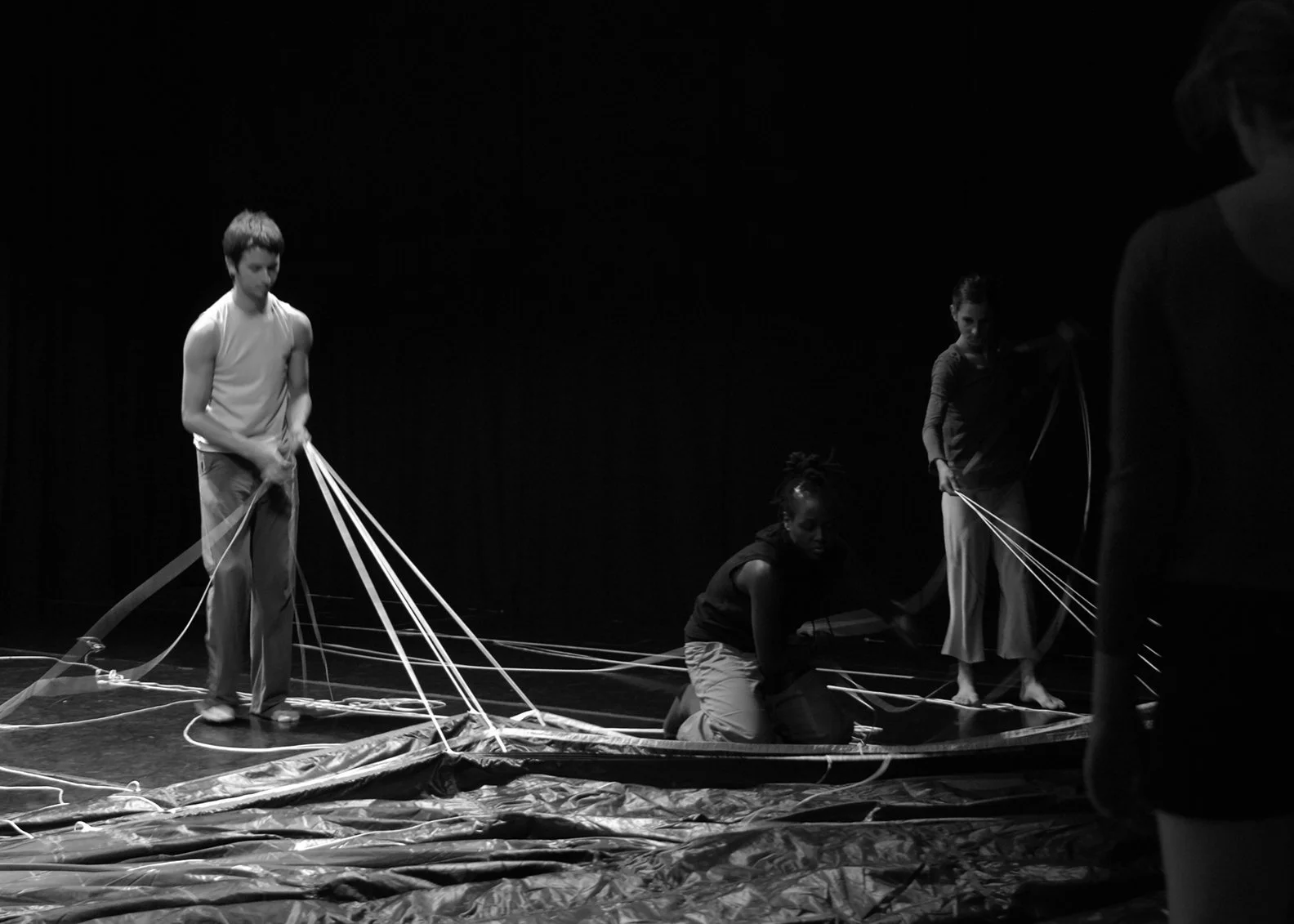
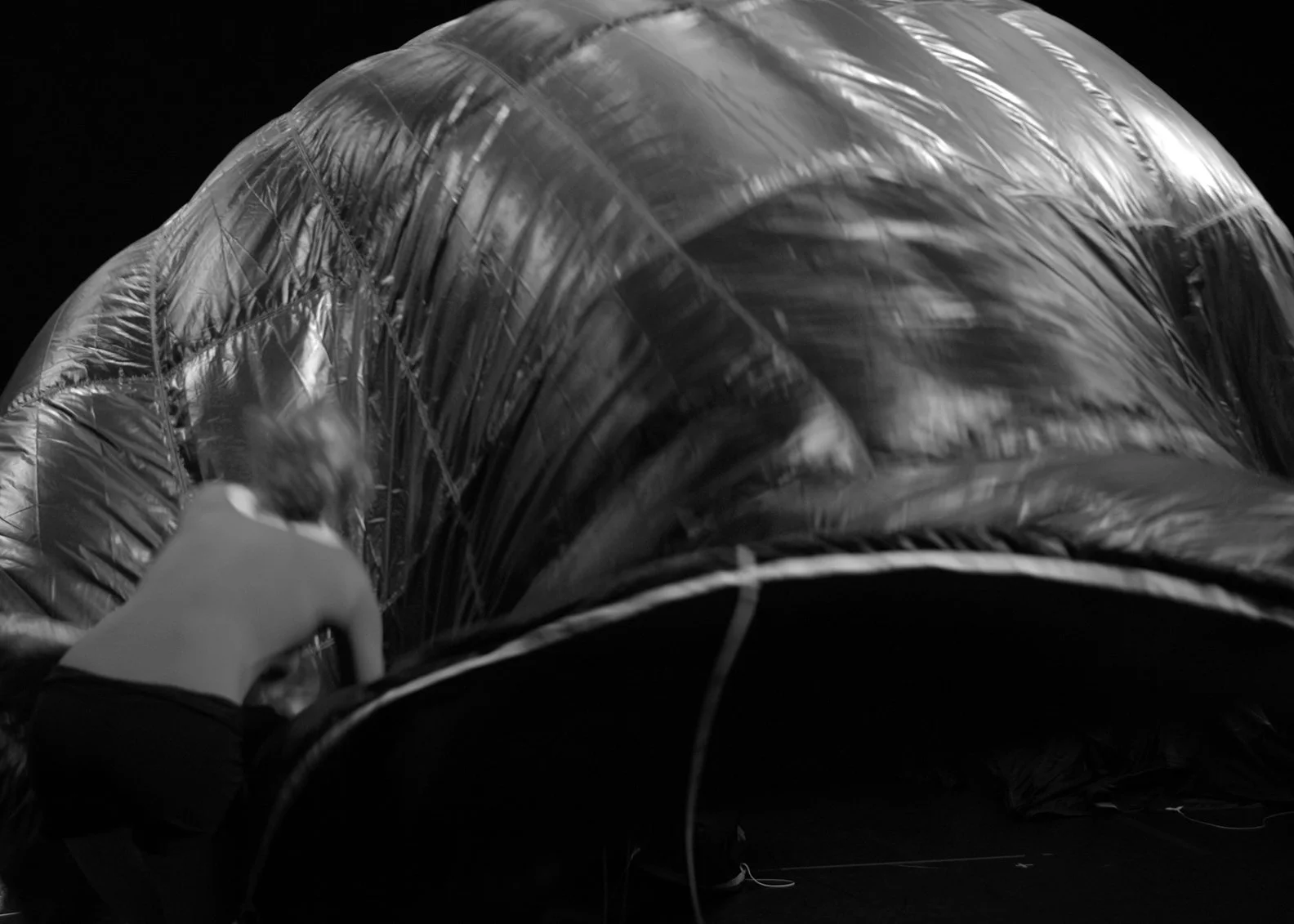
and parachutes adapted from children’s educational exercises used to teach volume and coordinated group movement.
As the parachutes expanded,
viewers were pushed toward the gymnasium walls and held between fabric, air, and architecture.
The distance inherent to the camera resonated spatially through the diagrams inscribed on the Marley floor.
Floyd established a performance system whose parts could separate,
accumulate,
and continue beyond the original live work.
It moved Nipper’s practice onto a larger stage across visual art,
performance, design, and dance, showing how research could become the work.