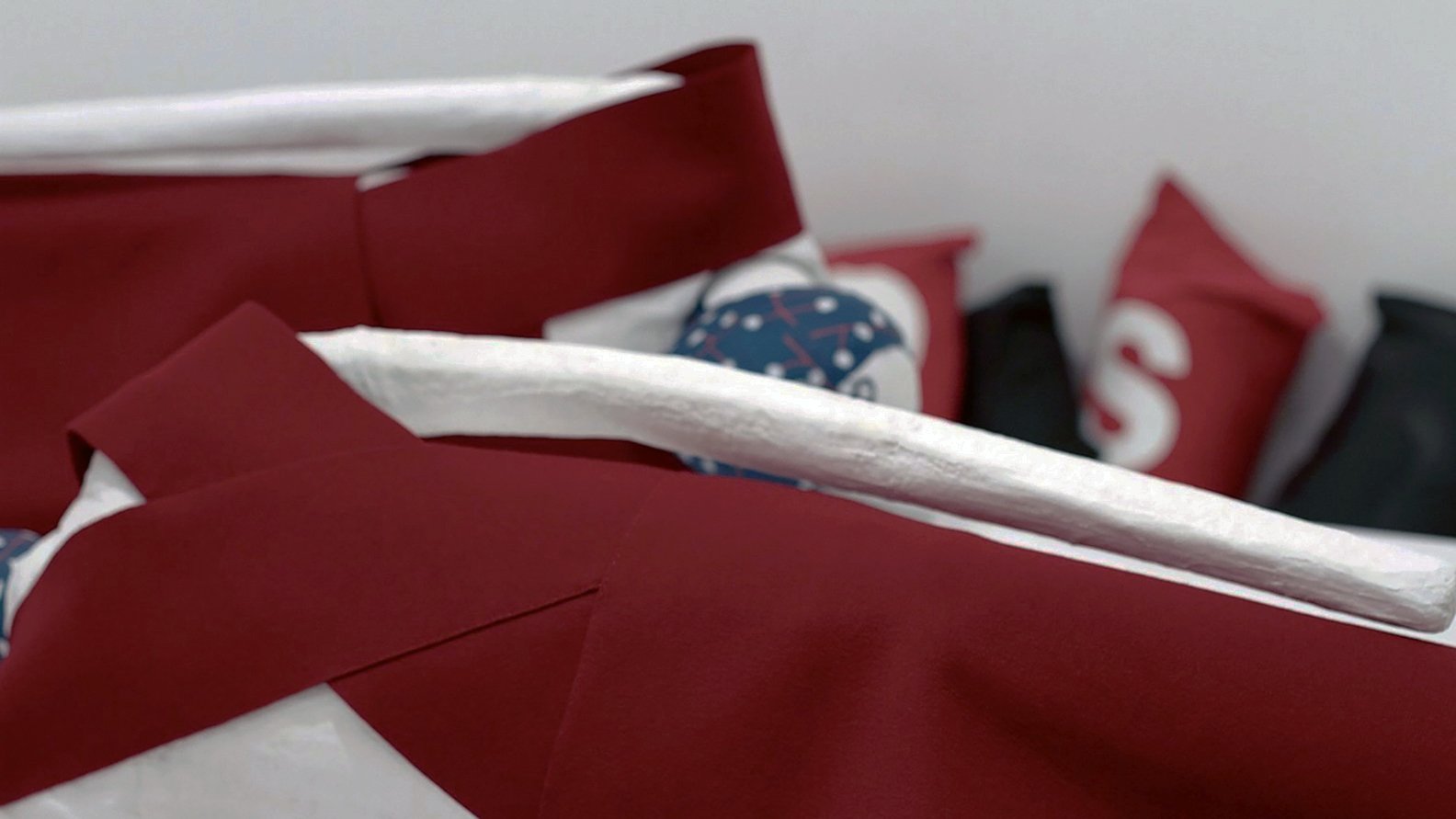
Black Forest developed through Nipper’s collaboration with curator Mirjam Varadinis at Kunsthaus Zürich,
where the museum’s archive of Rudolf Laban drawings became a point of reference.
Moving between performance,
research,
and exhibition,
the project considers the forest as both real and invented:
a geographic region in Germany shaped by
wilderness,
myth,
and timekeeping.
At Tramway in Glasgow,
Black Forest took form as an exhibition-length performance.
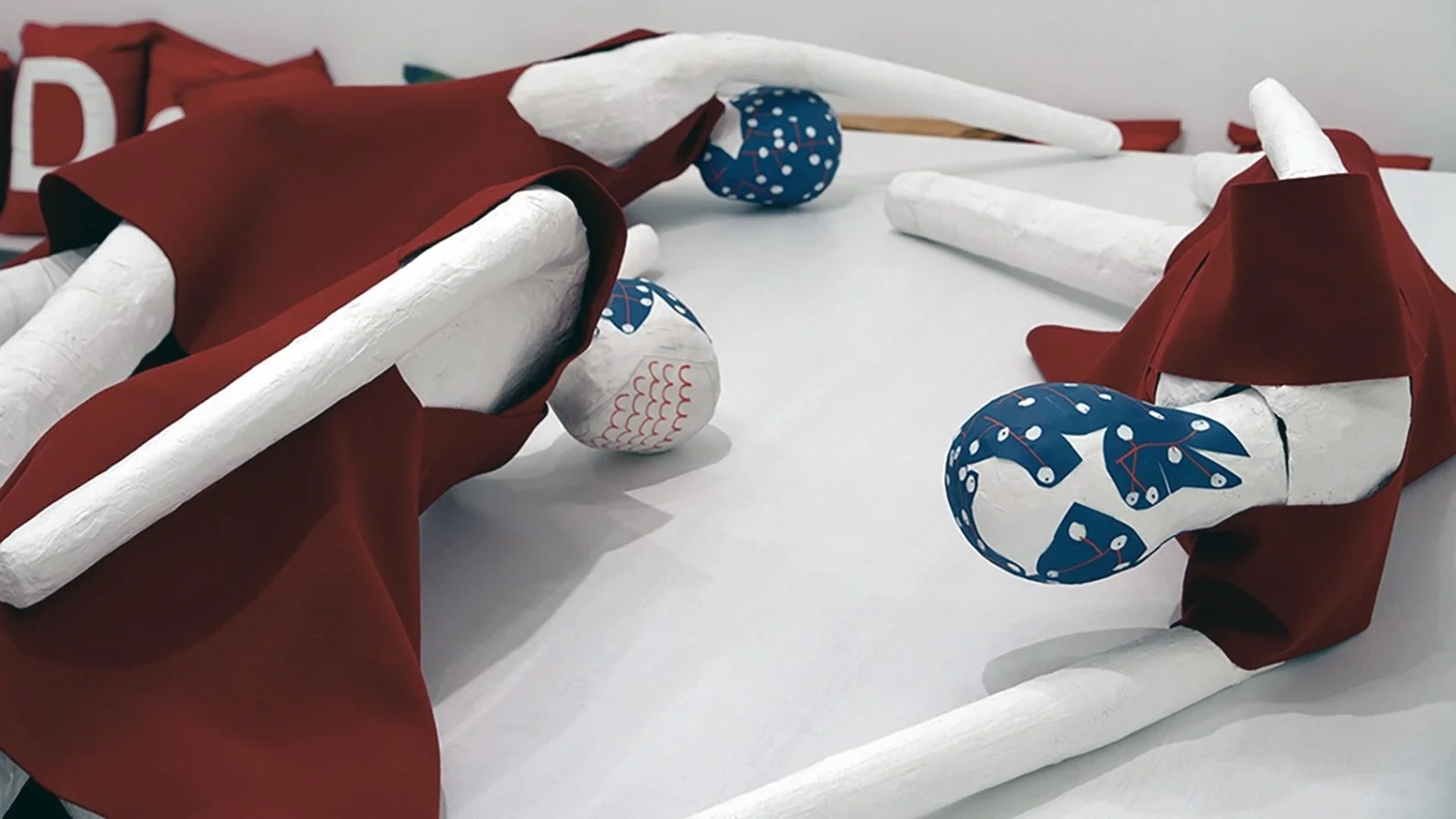
Six masked dancers in heavy
wool-felt pinafores inscribed geometric forms in space over ten days.
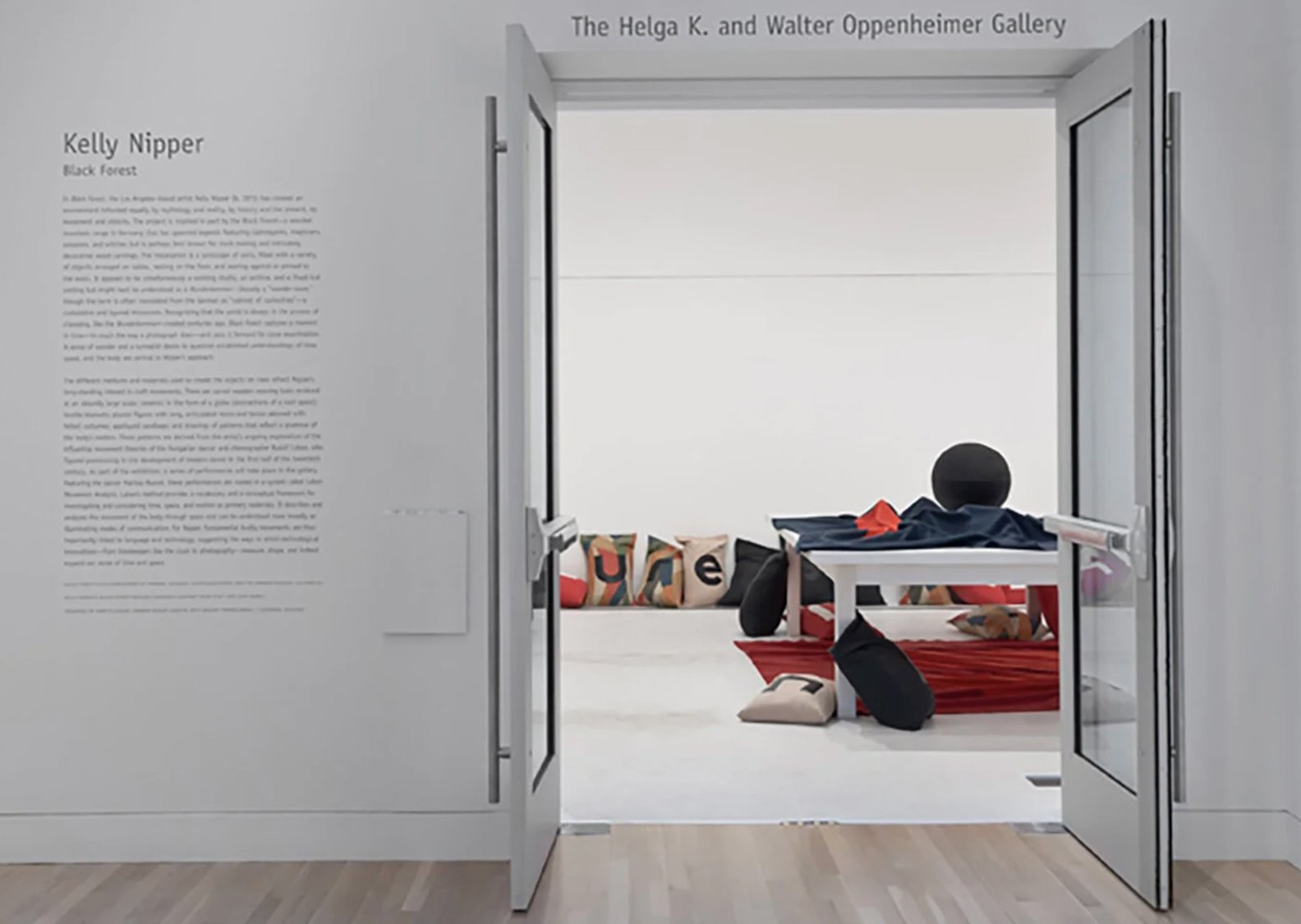
Later presented at Kunsthaus Zürich and the Hammer Museum,
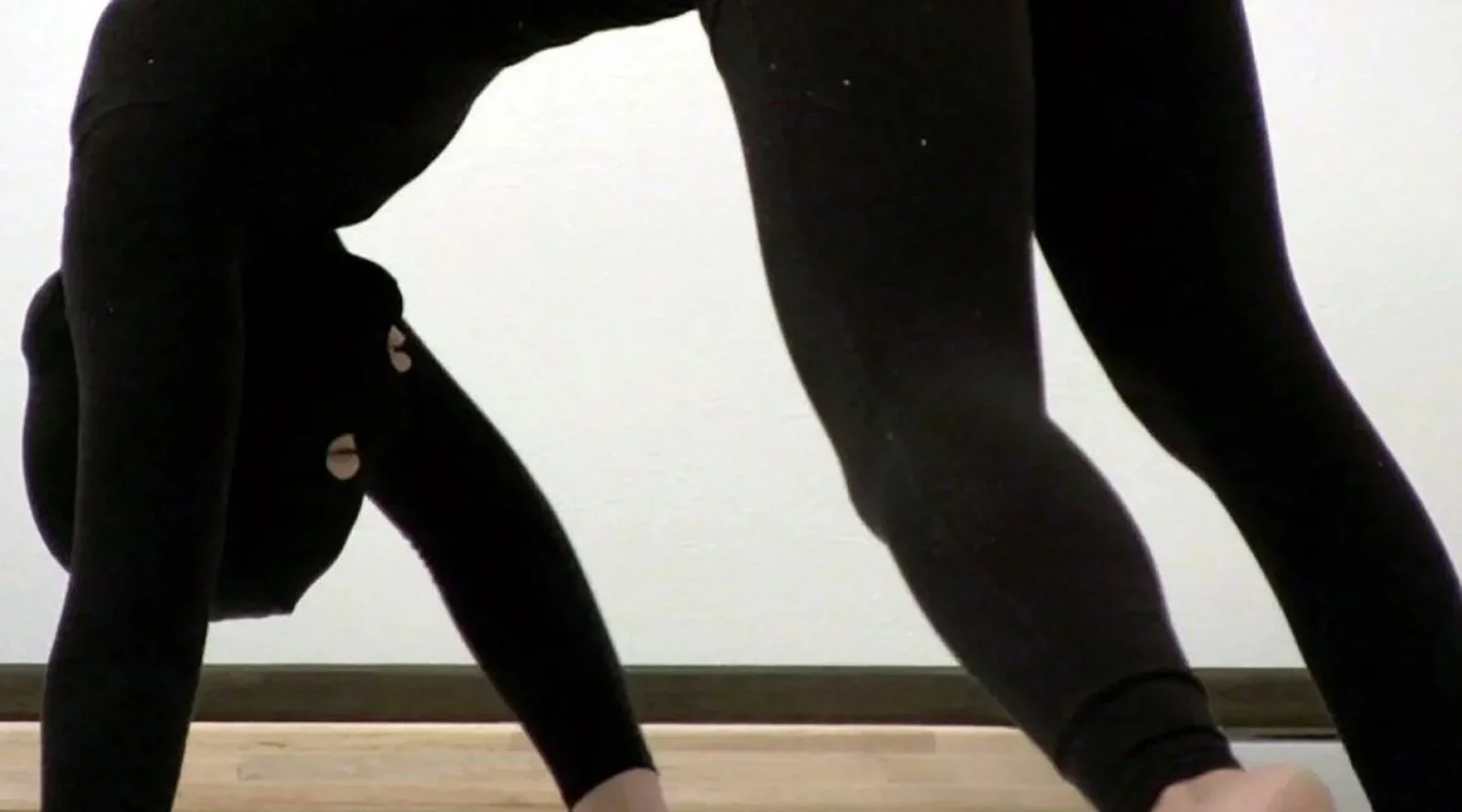
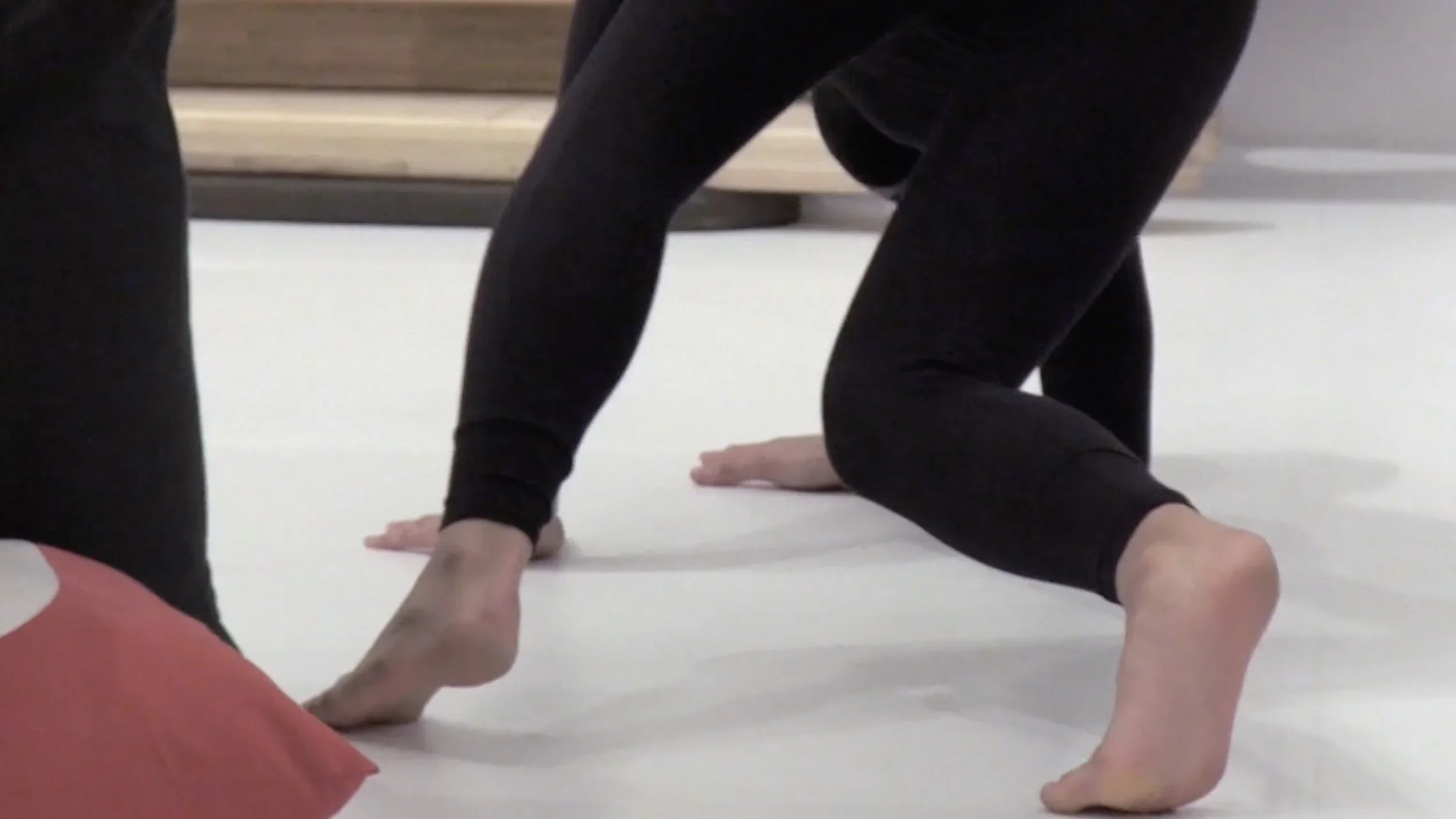
Black Forest holds the performance Mouvements du Centre de Gravité at the
project’s center of gravity.
A single dancer,
dressed entirely in black and moving low to the ground with eyes closed,
passes between animal movement and spatial instrument.
The cylinder is a structural condition shared by the body and room,
where weight organizes shape.
Across the project,
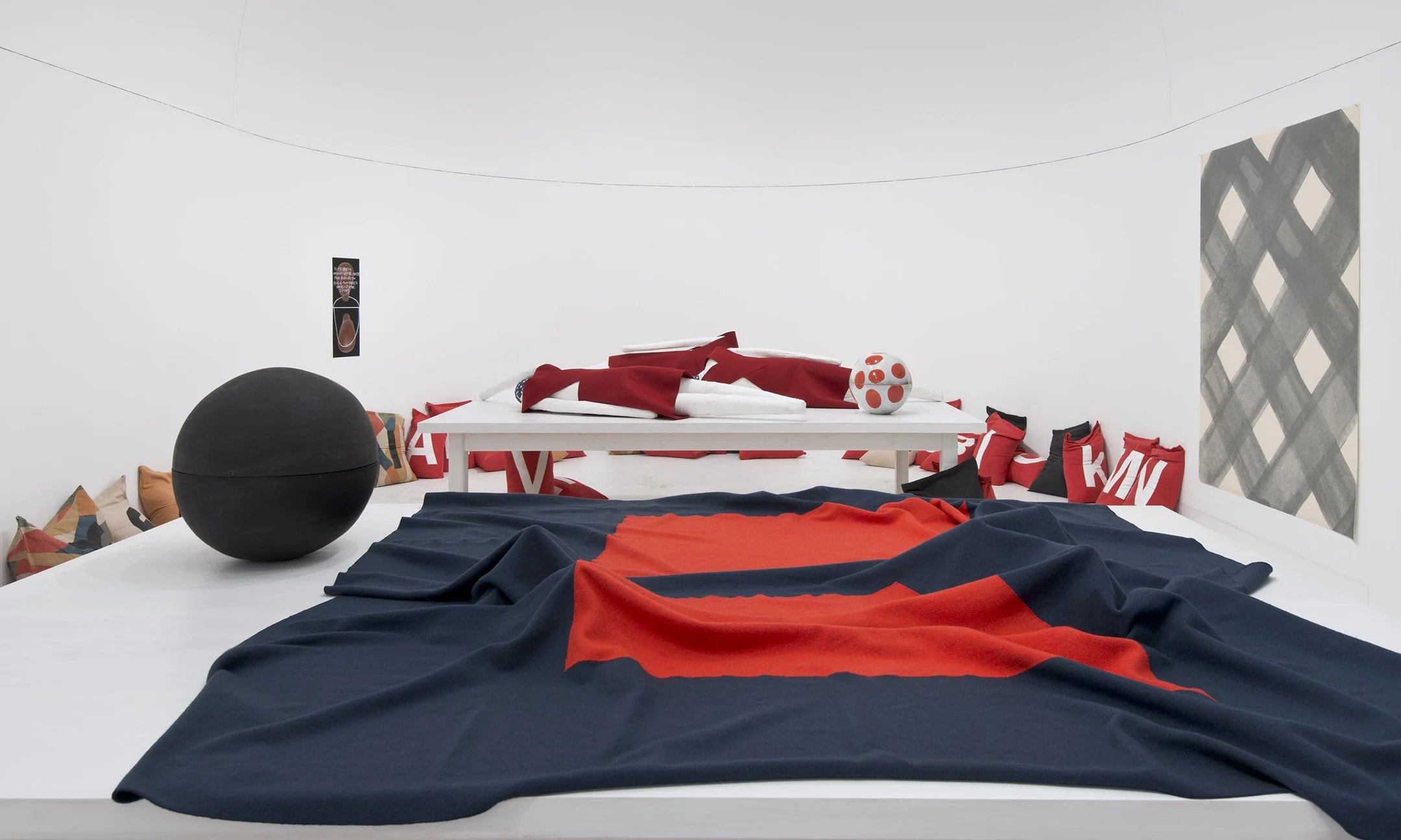
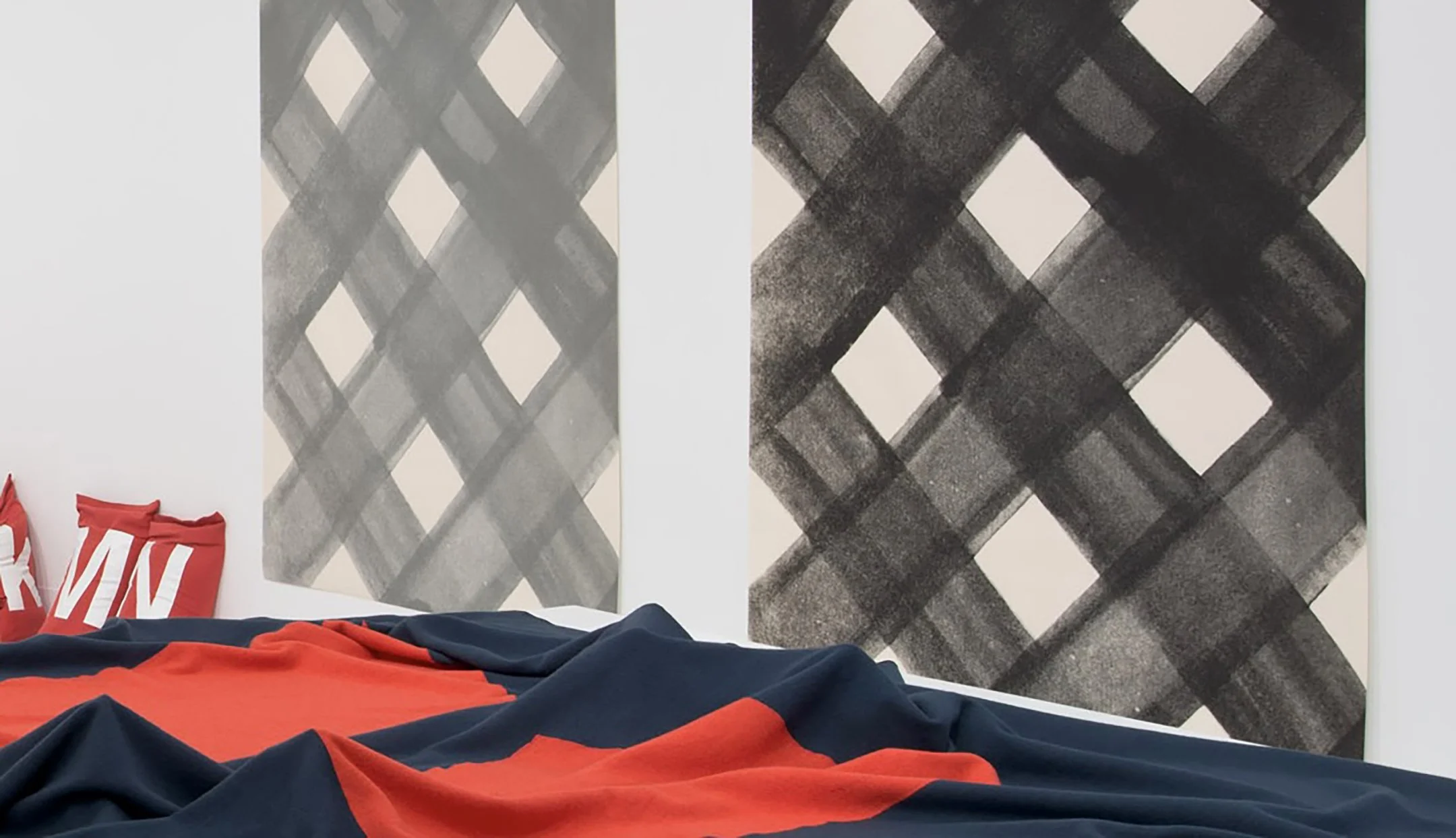
blankets appliquéd with symbols of the horizontal plane spread across the floor,
padding the space between surfaces
before becoming snow cover over staged landforms.
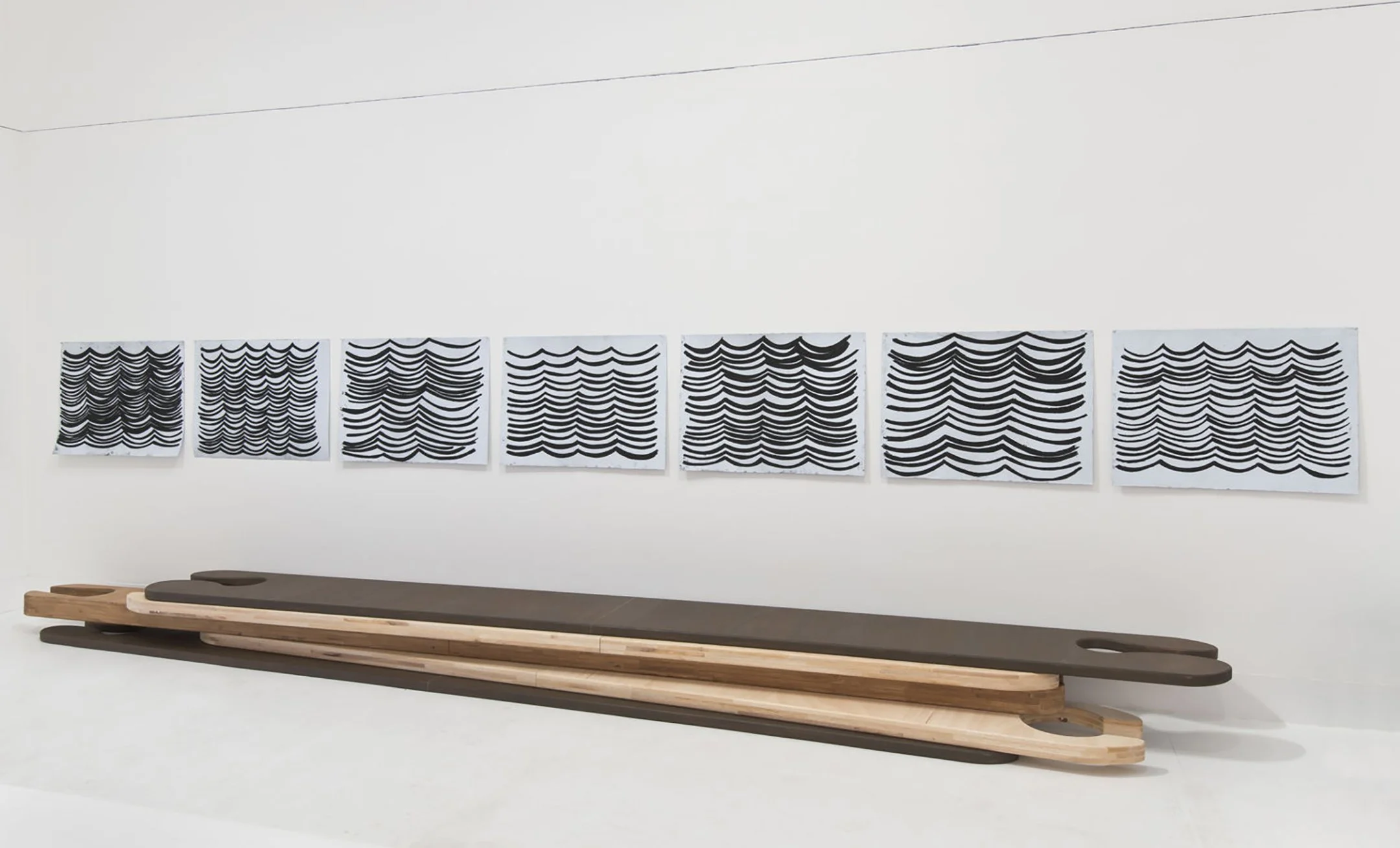
Space-phrasing diagrams translate qualities of movement into scalloped patterns;
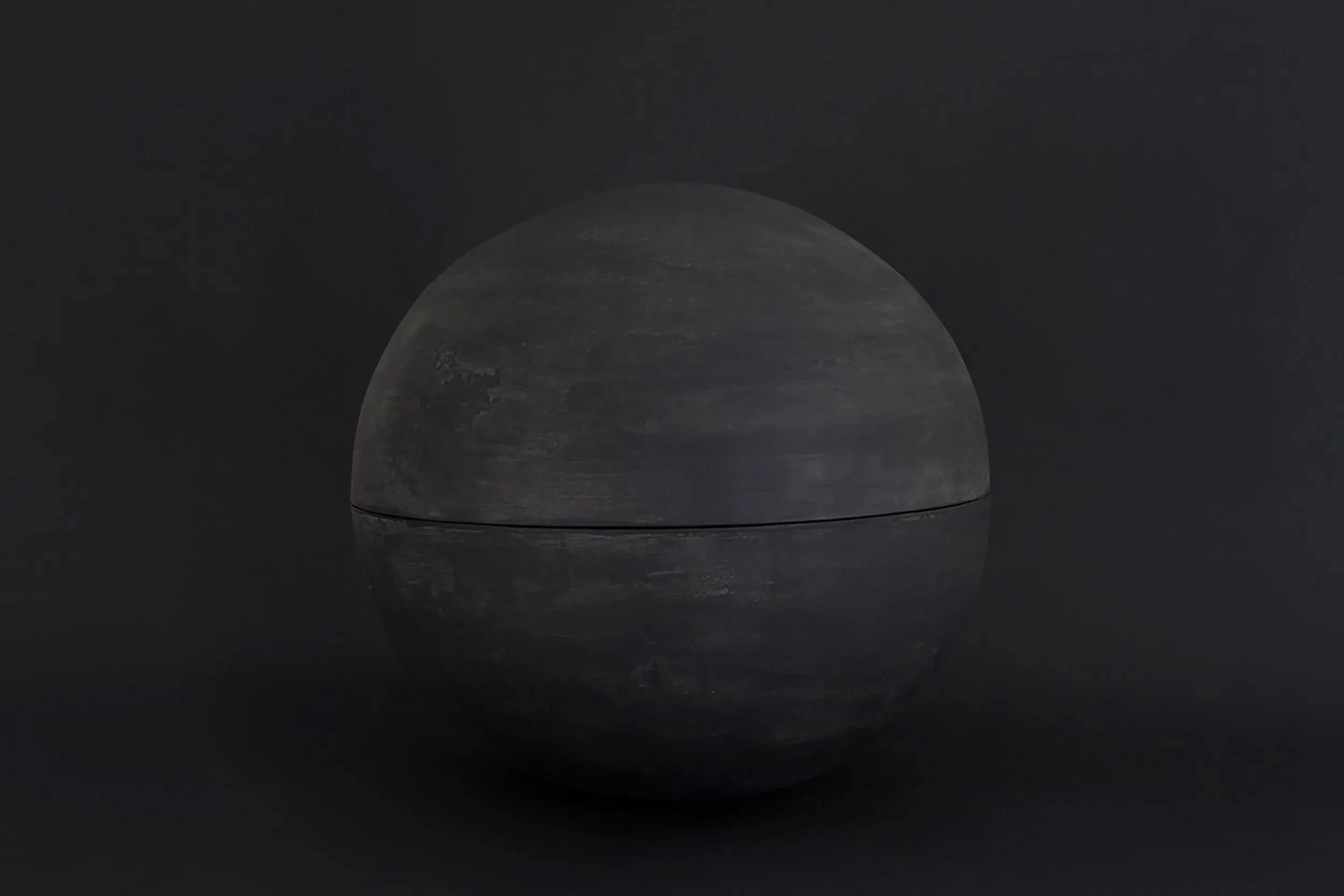
a black ceramic globe divides the planet at the equator;
large-scale weaving shuttles carry the loom into architectural scale;
walnut platforms turn notation into terrain.