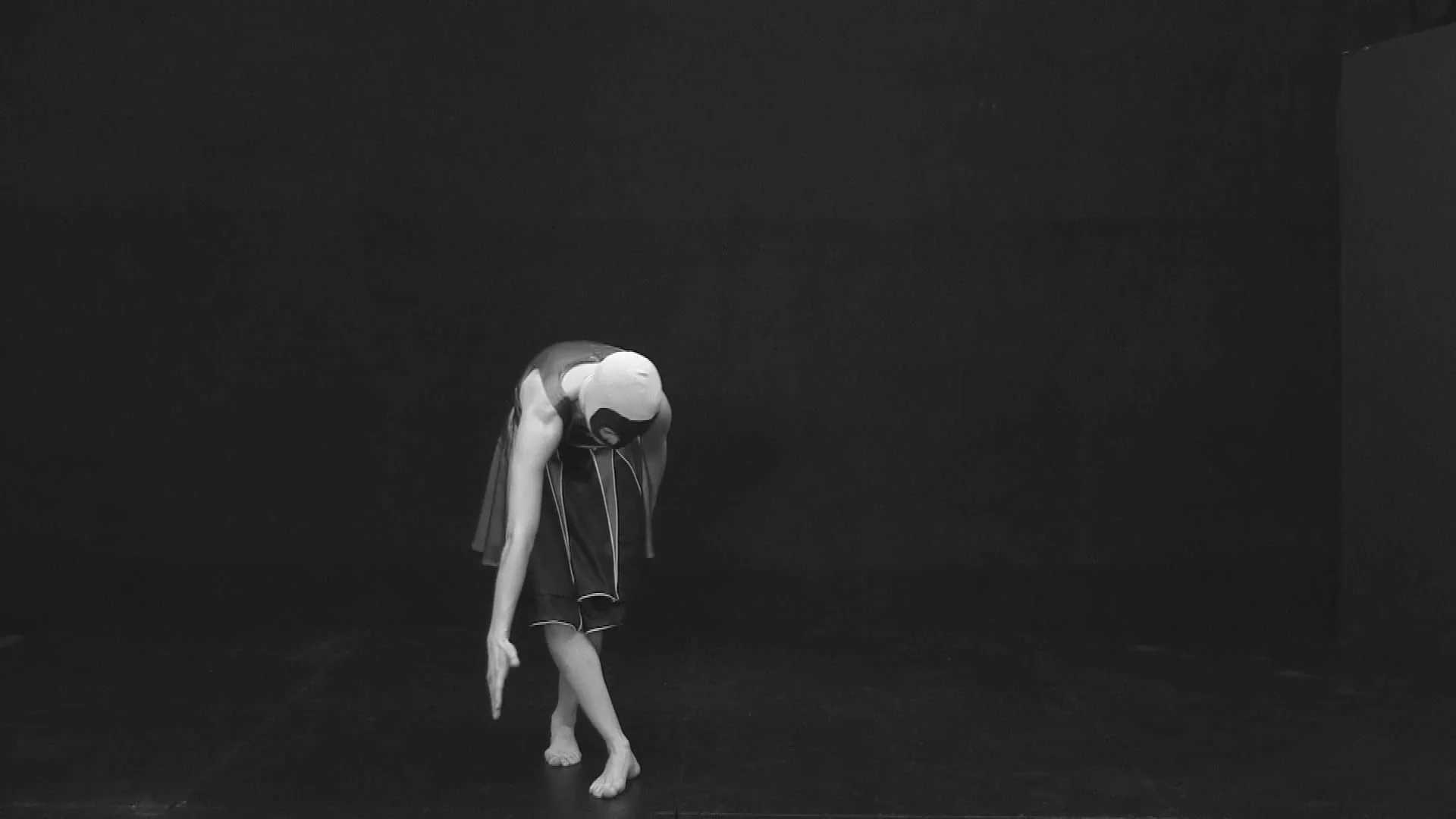
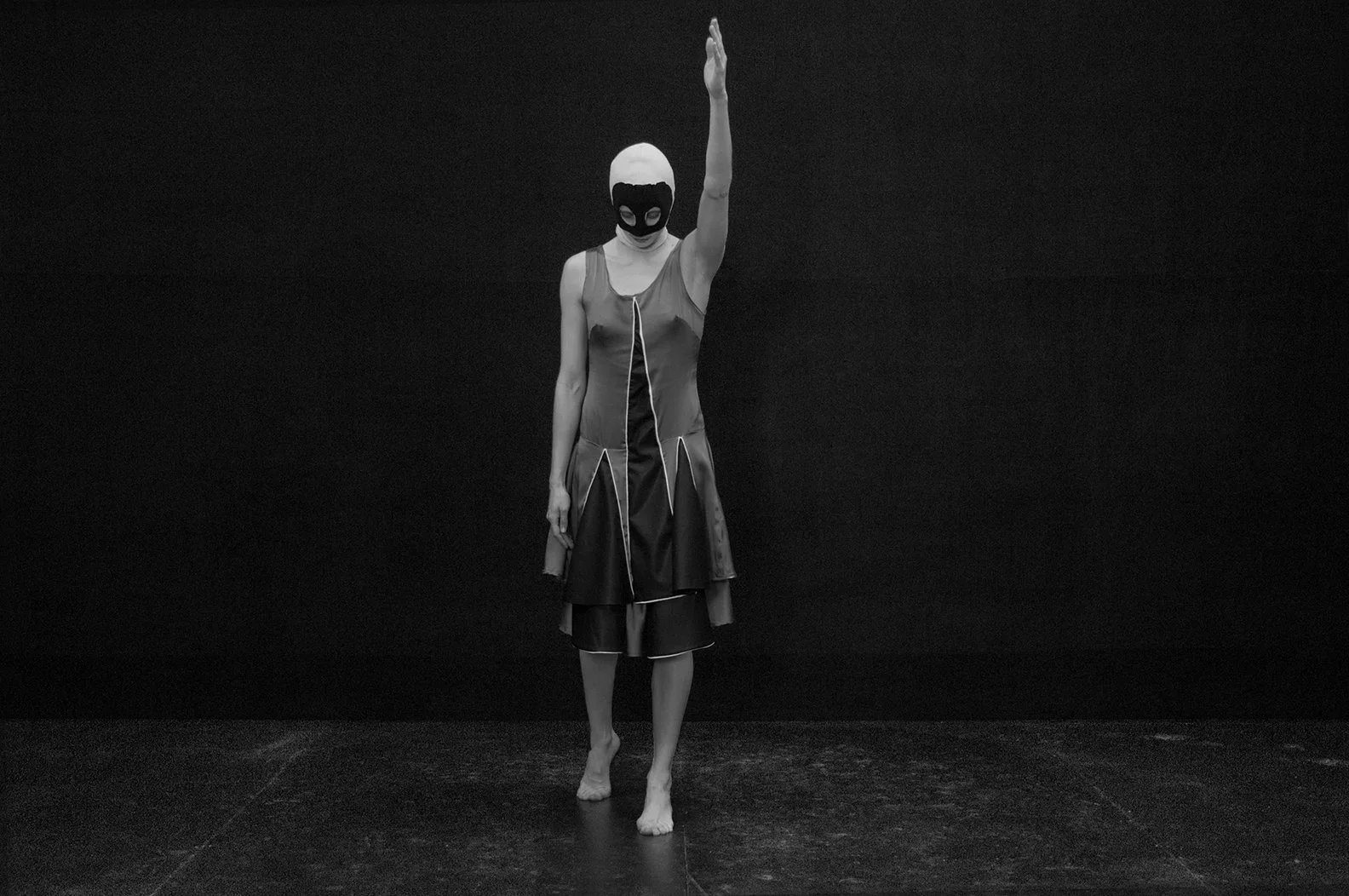
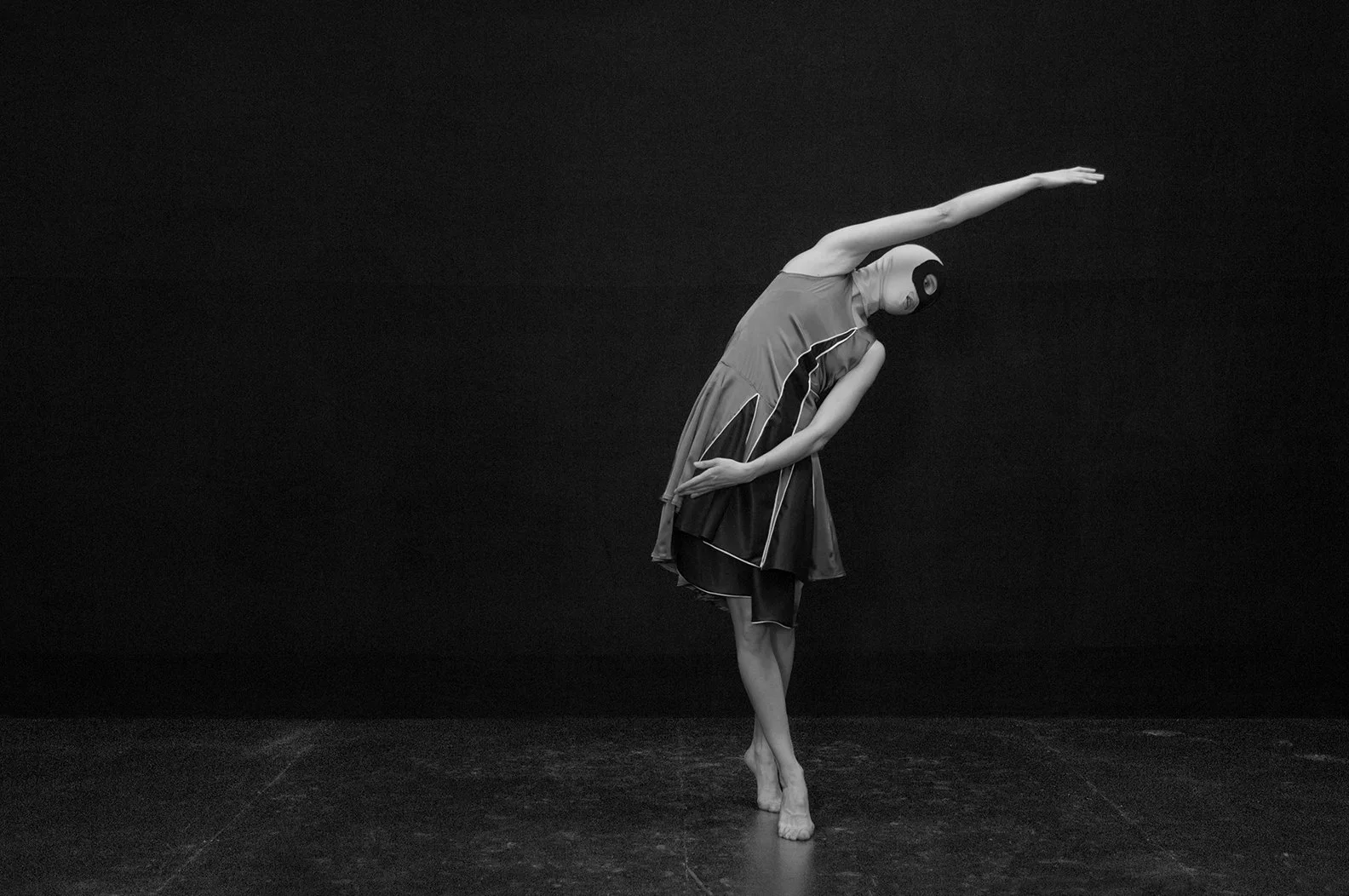
Developed as part of the performance project Floyd on the Floor,
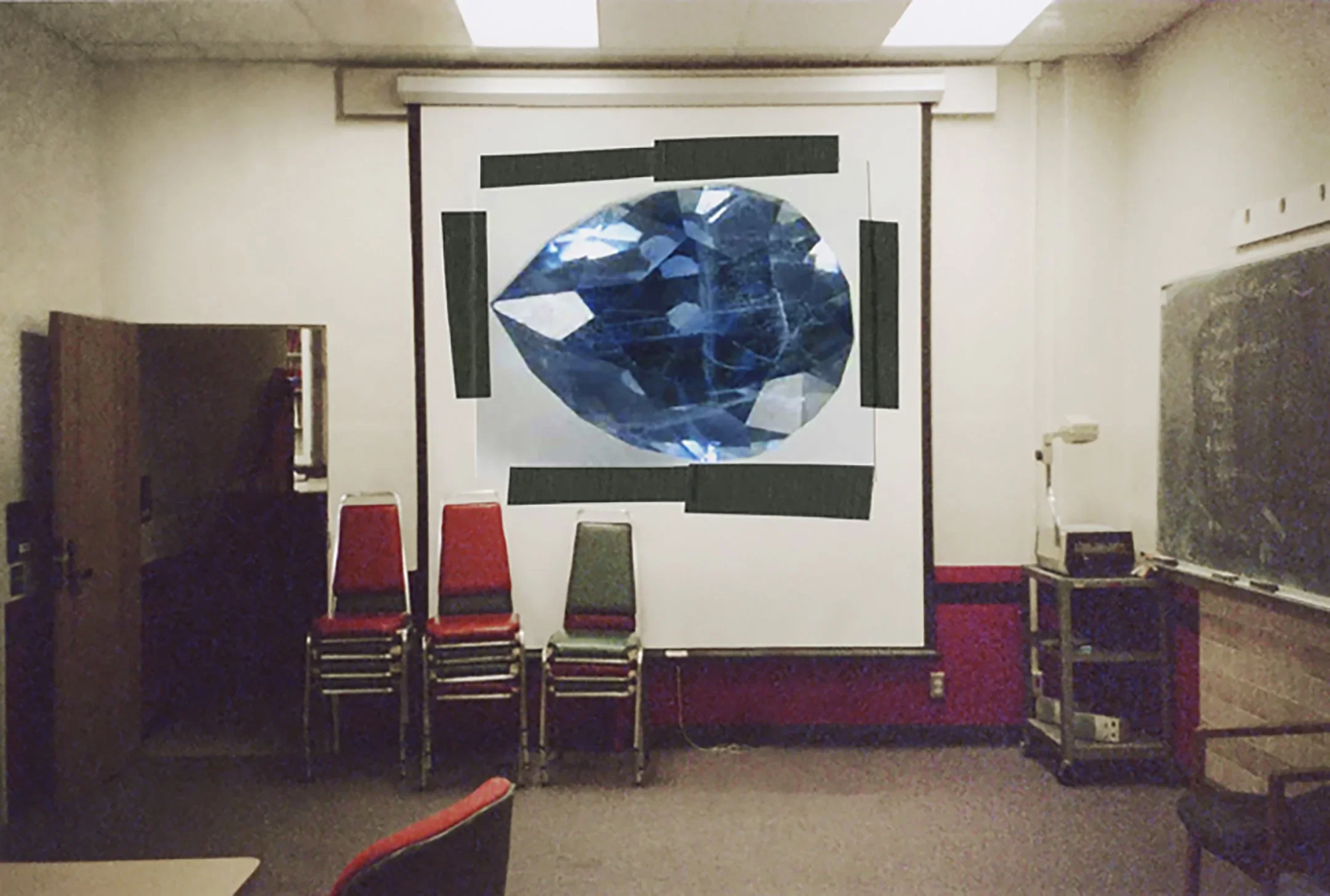
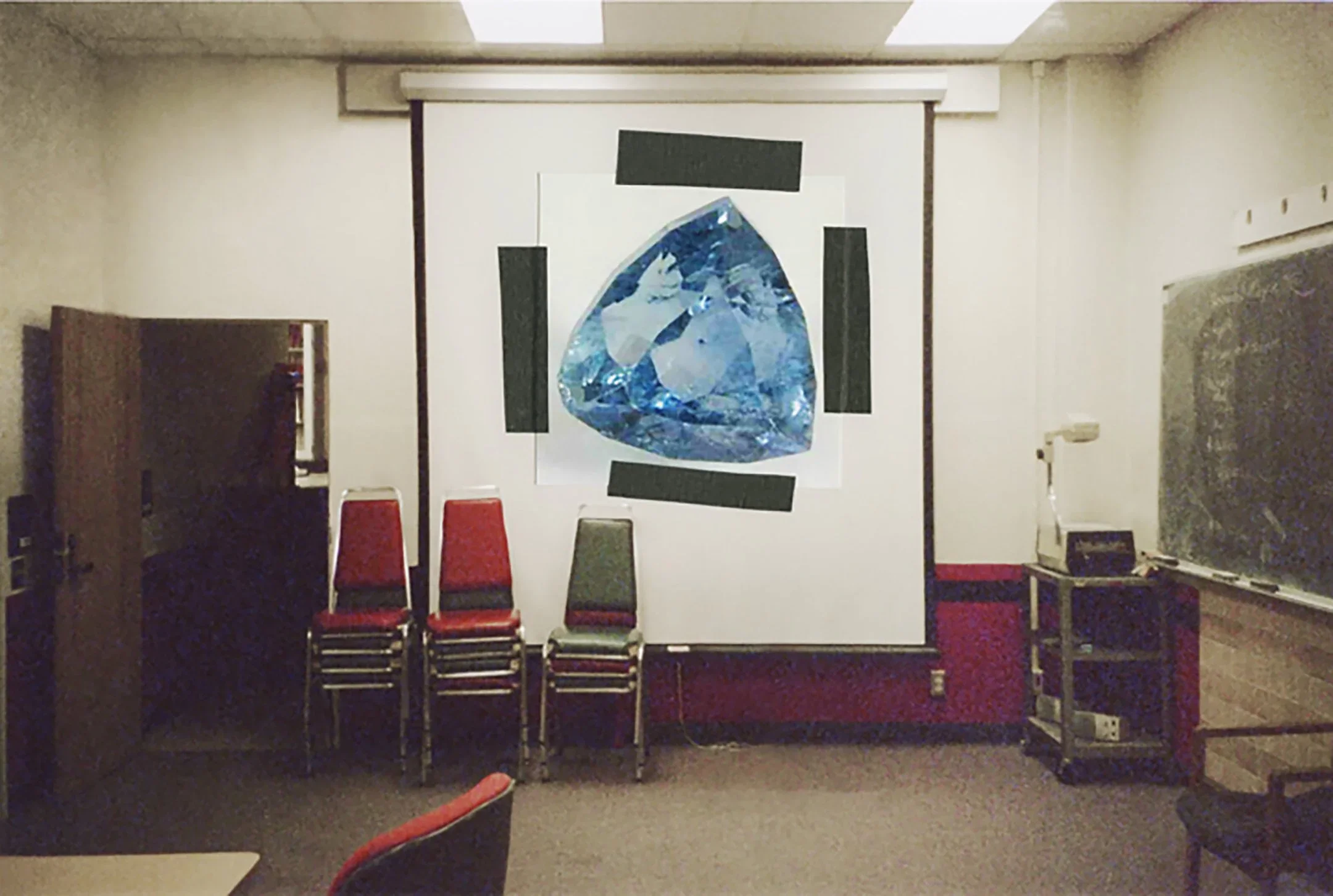
Sapphire engages the geometries of hurricane formation and perception.
The work links the eye of the storm,
the human or animal eye,
and the jewel as optical structures through which landscape is refracted and reorganized.
Seen through a sapphire,
the forest becomes a fractured field of planes, facets, and directional lines.
Filmed in black and white,
Sapphire includes voice-over excerpts from Jean-Luc Godard’s Alphaville (1965),
in which a female voice speaks from a condition of programmed intelligence
and describes an inability to experience love.
The study introduces a mechanical landscape through conventional theater flats made with canvas,
plywood, rope, and hardware,
later central to Black Forest and Tessa Pattern Takes a Picture.
Painted with rudimentary pine tree shapes built from triangles and rectangles,
the flats use forced perspective to produce a shallow depth of field,
making the forest appear to advance and recede.
The same graphic structure continues onto the dancer’s two-tiered dress,
where triangular appliqués split and spread as she moves,
expanding the forest from a manufactured plane into a moving body.
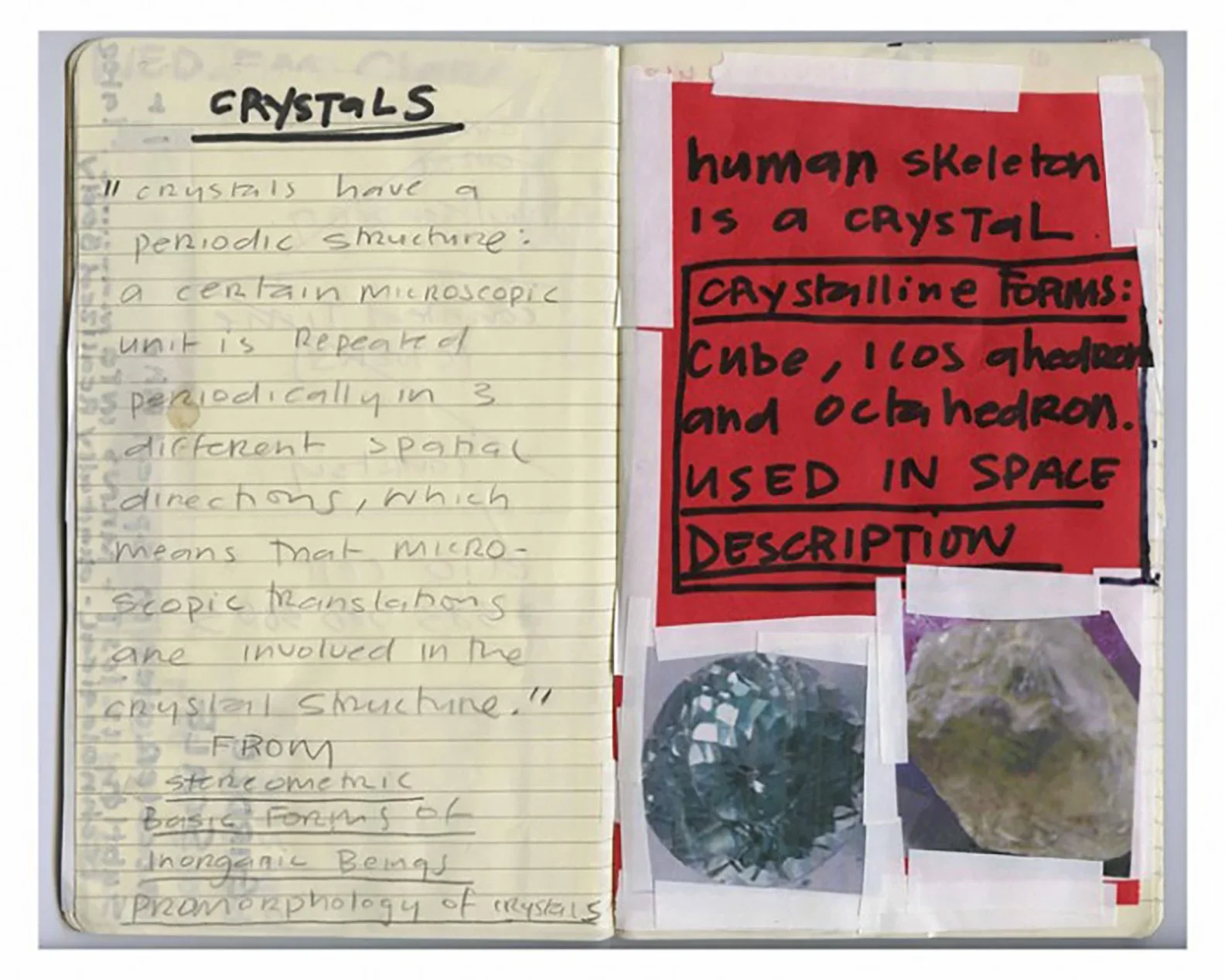
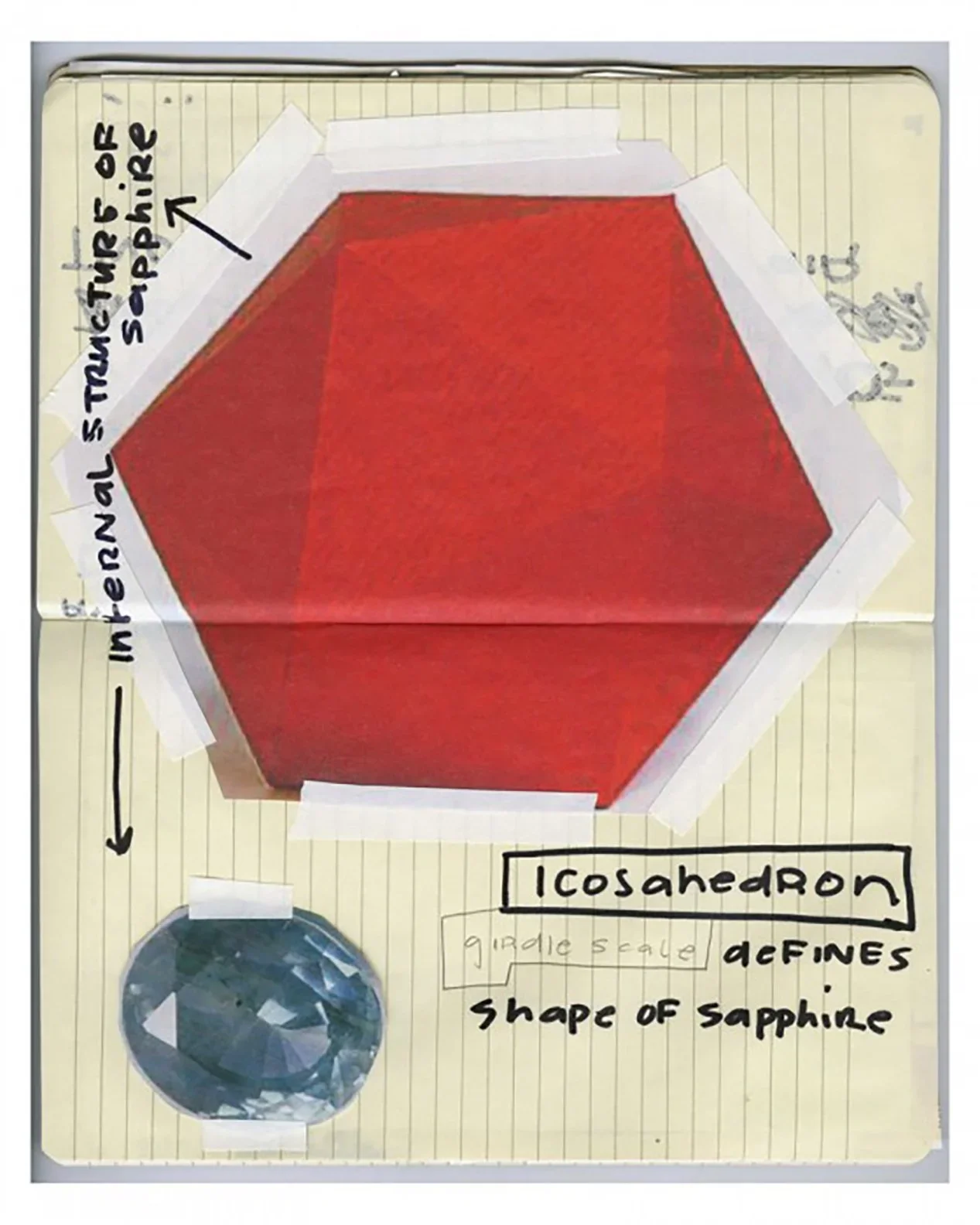
The crystalline structure of the icosahedron is generated through two scales:
an internal axis scale
that organizes directional lines and points of symmetry,
and a girdle scale that unfolds across the surface through triangular faces.
Together they form a spatial system in which interior construction
and exterior surface hold one another in suspension.